
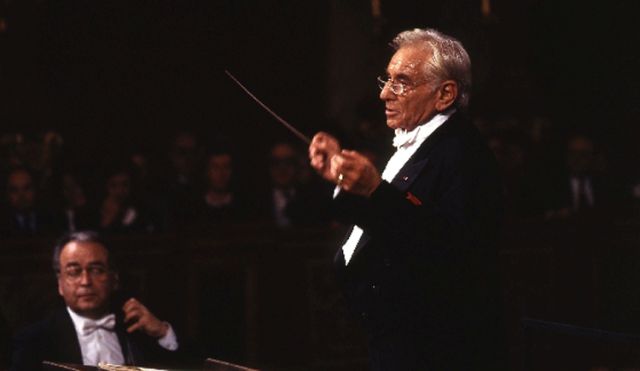
Sibelius, Symphony No.7 in C major, op.105
Conceived in one sole movement, the Symphony No. 7 is a triumphant display of "organic-thematic growth," with melodies and rhythms blending into one another, giving birth to new elements and branching out to develop in passages reminiscent of symphonic movements. Sibelius's last symphony was given its first performance in Stockholm on 24 March 1924 and was first heard in Finland in 1927. In the mid 1980s, Unitel began recording a complete cycle of Sibelius symphonies with Leonard Bernstein and the Vienna Philharmonic. Bernstein's death in 1990 unfortunately cut short this project after the release of Symphonies Nos. 1, 2, 5 and 7. They were recorded live at Vienna's Musikvereinssaal and were the object of stellar reviews. Bernstein, in the words of a leading Austrian daily, "painted a canvas of late-romantic splendor with the Philharmonic's sound - the incomparable brilliancy of the strings, the glowing intensity of the brass - in a way that only the greatest conductors can." (Symphony No. 1) And in its review of the Second Symphony, a major Viennese newspaper wrote: "For the sake of Jean Sibelius, Leonard Bernstein leaps with fanatical zeal into the heaving waves of late romantic emotions." It is not surprising that Leonard Bernstein felt so passionately about Sibelius's music. In many respects, it strikingly parallels that of Gustav Mahler. In fact, Sibelius's oeuvre is seen along with Gustav Mahler's as the most important symphonic legacy between late romanticism and modernity. And as Mahler's glowing advocate, Bernstein was suited like none other to disseminate the music of his great colleague Jean Sibelius.