
Mozart, Symphony No.29 in A major, K. 201
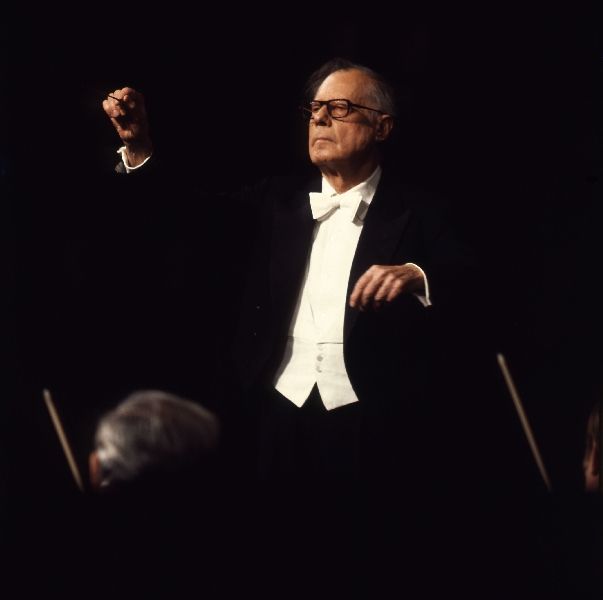
Filmed mainly in Vienna's splendid "Musikvereinssaal," the Mozart symphonies conducted by Karl Böhm are all interpreted by one of the world's foremost orchestras, the Vienna Philharmonic Orchestra, whose principal conductors have included Wilhelm Furtwängler, Bruno Walter, Herbert von Karajan, Claudio Abbado and, of course, Karl Böhm. "Thanks to Bruno Walter's exemplary performances, particularly of Mozart's works, I grabbed on to Mozart and fell in love with him so much that I had only one wish: to conduct Mozart, Mozart, Mozart." (Karl Böhm) This scintillating little symphonic gem marks a new climax in Mozart's treatment of the form: in addition to the forceful, clear-cut themes of the first and last movements, Mozart now makes a more refined and subtle use of counterpoint. The last movement also features the most dramatic development section thus far. Although certain aspects of the work may point to the influence of Michael Haydn, Joseph Haydn's younger brother, Mozart basically dipped into the stock of proven orchestral devices and techniques, transforming them into inimitably "Mozartean" ideas. Karl Böhm was universally acclaimed for his Mozart interpretations. Though Wagner was one of Böhm's first loves, his friendship with Richard Strauss led to a deep knowledge and appreciation of Mozart. In his autobiography, Böhm wrote that "Richard Strauss revealed to me the ultimate secrets of this, in my opinion, greatest of all musical geniuses, Mozart." Böhm's discovery of these secrets transformed his Mozart interpretations into unforgettable events.