
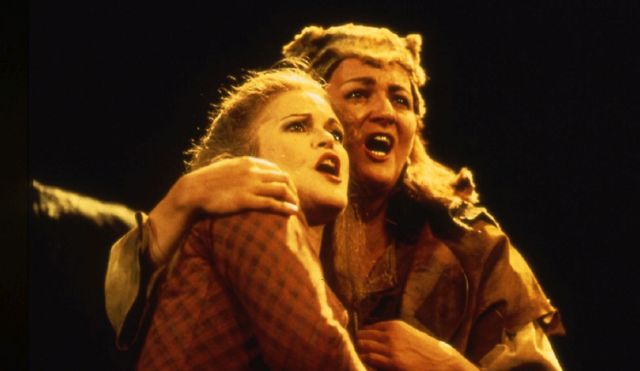
La donna del lago
Giocacchino Rossini (1792-1868) is known today above all as a composer of comic operas. However, he was much more than the admittedly brilliant creator of "Il barbiere di Siviglia" and "La Cenerentola." The intensive study of his oeuvre over the past decades has brought to light Rossini's multi-facetedness: Rossini was an important figure and major musical precursor both in the field of opera buffa and opera seria. Following a popular trend, Rossini wrote a number of works in which the rigid boundaries between opera buffa and opera seria are blurred. One example is the romantic melodrama in two acts "La donna del lago", which was premiered in Naples in 1819. It was based on the novel "The Lady of the Lake" by the Scottish author Sir Walter Scott. (Donizetti's successful "Lucia di Lammermoor," written about 15 years later, was also based on a source by Scott, who was extremely popular in Italy at that time.) It is the most romantic of all of Rossini's operas: the beautiful Elena, the daughter of a Scottish rebel, wins the heart of the king who, without knowing her true identity, offers her a ring that ultimately helps Elena find happiness. Love, jealousy, political intrigues and royal benevolence set the accents in this melodrama, which is closely connected to the nature, forests, lakes and mountains of the Scottish highlands. Rossini's wish to depict the Scottish spirit on the opera stage led him onto musical paths that he had never trodden before. Acclaimed movie director Werner Herzog stages this production from Milan's La Scala. The title role is sung by the fascinating American belcanto soprano June Anderson. The aristocrat of conductors, the autocrat of the baton, Riccardo Muti cuts a noble figure at the head of any orchestra, and ennobles every ensemble through his charismatic personality and red-blooded musicality. In many respects, including his unwillingness to compromise over artistic matters, he is reminiscent of Arturo Toscanini, who was also a demanding ruler at the podium. His rise to international fame set in with his guest conductorships at the Salzburg Festival in 1971 and at the head of the Berlin Philharmonic and the Philadelphia Orchestra in 1972. Muti became principal guest conductor of the Philadelphia Orchestra a few years later, and was named its music director in 1980. Always a conductor of both the symphonic and operatic repertoire, Muti advanced to the post of music director of La Scala in Milan in 1986. The 1990s saw Muti consolidating his reputation at the head of this venerable institution, as well as in countless other high-caliber venues around the world. Today he is one of the undisputed giants among the leading conductors of the world.