
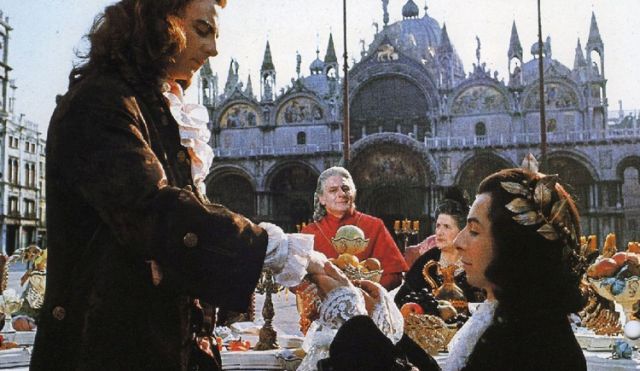
Händels Auferstehung (Handel’s Resurrection)
Stefan Zweig (1881-1942), one of the most brilliant European writers, essayists and biographers, describes in his book "Sternstunden der Menschheit" decisive moments in the lives of great men and women of all times. "Handel's Resurrection" is a story taken from this book. In freely adapted sequences, the film combines a great literary work and a classical musical composition. Based on motifs from Stefan Zweig's story, the film describes a caesura in Handel's creative life. It was a period in his life when he was almost on the brink of complete despair but finally regained new and unbounded creative power, which led to the composition of his "Messiah." This work marks a turning point in the musical life of his time: a new form of musical composition, the oratorio, takes the place of the baroque opera of predominantly Italian influence, while at the same time competing with another operatic novelty, "The Beggar's Opera," an early forerunner of "The Three-Penny Opera." Director Klaus Lindemann, who has developed a new dramatic approach for TV productions of musical works, resorts to the elements of drama to give emphasis to the ups and downs in the life of this great musician. Karl Richter conducts the Munich Bach Orchestra and Munich Bach Choir. Among the soloists is the celebrated Gundula Janowitz.