
Apollo et Hyacinthus (Mozart 22)
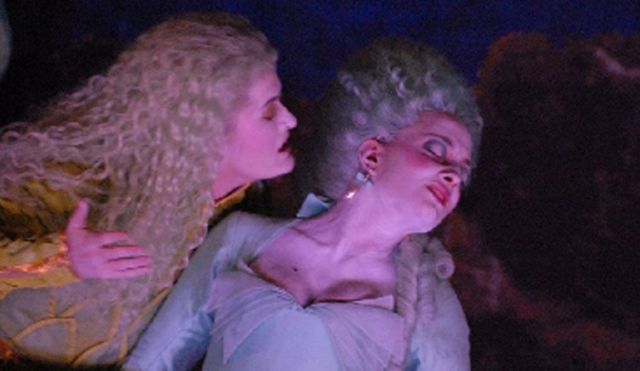
Mozart was eleven years old when he wrote "Apollo et Hyacinthus" K. 38 and "Die Schuldigkeit des ersten Gebots" (The Obligation to Observe the First Commandment) K. 35 in 1767. Their brevity and contemporaneity made it seem fitting to entrust them to one director for their stage interpretations within the Mozart 22 project. John Dew, known and admired for his rediscoveries of long-neglected works and his highly imaginative productions, has created a semi-ironic framework that ideally suits the two little pieces. They are given a graceful musical accompaniment by the Symphony Orchestra of the Mozarteum University. "Apollo et Hyacinthus" is Mozart's very first operatic venture and was commissioned soon after the successful performance of "Schuldigkeit." "Apollo" is a Latin intermezzo that was intended as an insert between the prologue and the five-act school drama "Clementia Croesi." Curiously, it already contains many of the themes that would recur in Mozart's later operas: disguise, intrigue, transformation, self-discovery... The plot concerns Zephyrus' love for Melia, who is about to marry Apollo. In his jealousy, Zephyrus gravely wounds Hyacinthus with a discus and, to have Apollo banished, accuses Apollo of murder. Apollo, who saw Zephyrus throw the discus, turns the true culprit into a wind. The dying Hyacinthus reveals the truth and Apollo consoles the mourning family by changing their son into a flower. "Die Schuldigkeit des ersten Gebots" is an allegorical drama in three parts that was first performed in the Archbishop's residence in March 1767. Mozart composed the first part. The work is an offshoot of the 17th-century tradition of the Jesuit school drama in which the characters are purely symbolic. Here, the "lukewarm Christian" becomes the object of contention between two authorities. Worldliness tempts him with the pleasures of the senses; a trio formed by Justice, Mercy and Christian Spirit urges him to choose an active Christian life. Mozart included such subtle musical touches as a 3/4 dance rhythm and merry woodwinds deployed by Worldliness and an alto trombone that summons the hero to the Last Judgment - an instrumental color that will appear prominently in "Don Giovanni"…