
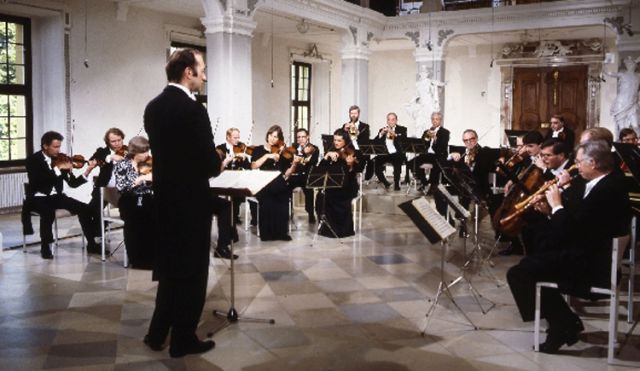
Bach, Suite (Overture) No. 3 in D major, BWV 1068
In Bach's time, the terms "suite" and "overture" were often used interchangeably. This was because the first movement of a suite was generally a French Overture and tended to dominate the entire work. Bach himself referred to his four orchestral suites as "overtures." The four overtures which open each of Bach's four orchestral suites are among his most majestic achievements. The custom of rounding off the grandiose Baroque overtures with a string of dances and other light pieces was perhaps suggested by popular Rococo suites of dances for chamber or keyboard instruments. A musician's musician, an occasional firebrand and a constant paradox - Nikolaus Harnoncourt (born in 1929) is one of the most profound and intriguing conductors of our time. Considered one of the world's leading specialists of Baroque music, he has long since turned his attention to Mozart, Beethoven, Schubert, and even to Jacques Offenbach and Johann Strauss. He spent many years as a cellist with the Wiener Symphoniker before founding the "Concentus Musicus Wien" with his wife Alice in 1953. It soon became one of the world's most respected ensembles specializing in the performance of early music on original instruments. In the 1970s, Harnoncourt joined forces with Jean-Pierre Ponnelle to stage a series of Monteverdi operas at the Zurich Opera House. This universally acclaimed cycle contributed to a renaissance of Monteverdi's music and set standards for early Baroque performance practice. He later began to turn his attention more and more to the music of Mozart, whom he considers "the most romantic of all composers". Harnoncourt did not make his official debut at the Salzburg Festival until 1992. He has been conducting there regularly since then and is a sought-after guest conductor of such reputable ensembles as the Berlin and Vienna Philharmonics, the Concertgebouw Orchestra of Amsterdam and the Chamber Orchestra of Europe.