
Introduction to Brahms, Symphony No.4 in E minor, op.98
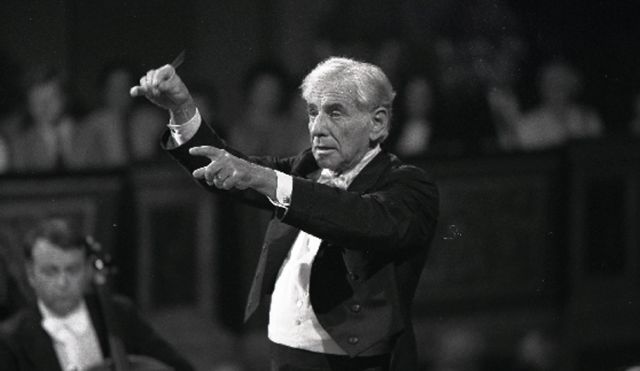
Composed during the summer months of the years 1884 and 1885 in Mürzzuschlag, southwest of Vienna, the Fourth Symphony tended to disconcert the public at first and had to prove itself in the concert circuit before gaining recognition as a masterwork of epoch-making stature. What Brahms's contemporaries regarded as difficult and bewildering were above all the extreme constructive density of the score, the unusual layout, especially of the third and fourth movements, a number of archaic elements pointing back to the formulae and techniques of "early music" (the passacaglia in the fourth movement) and the austere, elegiac mood that permeates the entire work. The premiere of the Fourth Symphony performed by the Meiningen Court Orchestra in Meiningen under Brahms's direction on 25 October 1885 was a great success. The work became the chief feature of the orchestra's ensuing tour, with Brahms conducting it in nine cities. Between 1981 and 1984, Leonard Bernstein recorded nearly all of Brahms's orchestral works with the Vienna Philharmonic Orchestra to honor the 150th anniversary of the composer's birth in 1983. Today, the cycle is considered as a landmark in the interpretation of Brahms' music. Bernstein and the Vienna Philharmonic have underscored both the classicism and romanticism, the dramatic intensity and the sober restraint of Brahms's music. The venue was Vienna's Musikvereinssaal, where two of Brahms's symphonies were premiered and where Brahms himself conducted. In his introductions, Bernstein speaks with an eloquence and conviction that go far beyond the opening words to a traditional concert performance. With his stimulating theories on Brahms and his music, Bernstein prompts viewers to listen to the music with an open mind.