
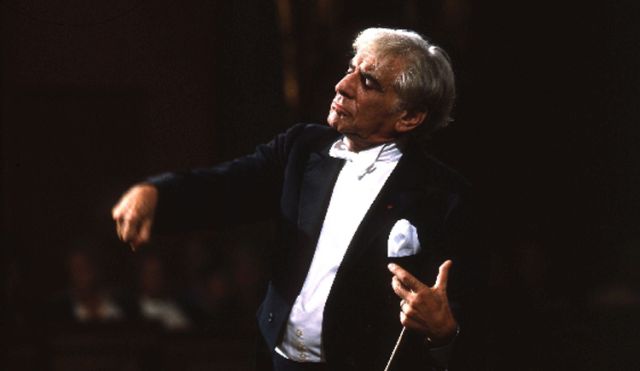
Introduction to Brahms, Symphony No.2 in D major, op.73
Brahms's sunny Second Symphony is as warm and lyrical as his First had been stormy and dramatic. It quite possibly reflects the idyllic nature around Lake Wörth in Austria, where Brahms composed it in the summer of 1877. Brahms himself, however, called attention to the melancholy current that undermines the pastoral serenity ("You've never heard anything as world-weary as this", he wrote to his friend Schubring). Despite the apparent simplicity of the symphonic writing, the work is strengthened and enriched by many thematic threads that run from one movement to another. It has been a special favorite among music lovers since its premiere in Vienna on 30 December 1877. The celebrated 19th-century music critic Eduard Hanslick wrote that it was for "all who long for good music, whether they understand its complexity or not". Between 1981 and 1984, Leonard Bernstein recorded nearly all of Brahms's orchestral works with the Vienna Philharmonic Orchestra to honor the 150th anniversary of the composer's birth in 1983. Today, the cycle is considered as a landmark in the interpretation of Brahms' music. Bernstein and the Vienna Philharmonic have underscored both the classicism and romanticism, the dramatic intensity and the sober restraint of Brahms's music. The venue was Vienna's Musikvereinssaal, where two of Brahms's symphonies were premiered and where Brahms himself conducted. In his introductions, Bernstein speaks with an eloquence and conviction that go far beyond the opening words to a traditional concert performance. With his stimulating theories on Brahms and his music, Bernstein prompts viewers to listen to the music with an open mind.