
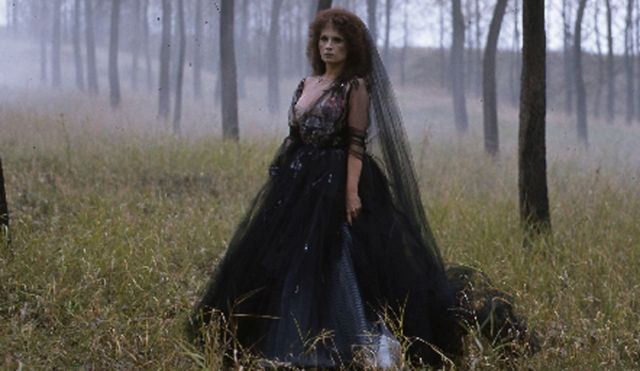
The Turn of the Screw
The central dramatic situation of the opera, based on Henry James's novella, lies in the conflict between the governess and two evil spirits, the former servant Quint and the former governess Miss Jessel, both of whom exerted a great influence on the two children and who after death - at least this is what the governess believes - are trying to establish their hold over the youngsters. The question of whether the ghosts really exist or are only a figment of the young woman's feverish imagination remains open in the Henry James tale. Indeed, in the opera the ghosts are seen and heard; consequently, in the film, Petr Weigl leaves open the possibility that they are only imagined by the governess. The viewer can decide whether "The Turn of the Screw" is a fairy-tale battle between good and evil or a tragedy about destructive influences on inexperienced youth. Britten's score stands in contrast to the abundance of ideas to be found both in the literary model and the libretto. The score is tighter and the music formally more consistent than in his other operas. The work consists of a prologue and 16 scenes which are connected by orchestral intermezzos - variations on the main theme. This main theme is a 12-tone scale which, however, Britten in no way considered to be a negation of tonal hierarchy, but rather as a ramification of that technique. "The Turn of the Screw", written in 1954, was premiered that same year at the Teatro La Fenice in Venice with the English Opera Group.